
If your wooden furniture looks dull, dry, or scratched, you do not need to replace it. You can polish wood furniture at home using simple tools, natural ingredients, and the right professional method. In this in-depth guide, I will walk you step by step through how to polish wood furniture at home, what materials you actually need, which wax works best, and the mistakes most people unknowingly make.
By the end of this guide, you will know:
- How to polish wood furniture at home properly?
- Which tools and materials do professionals actually use?
- Which wax is best for different furniture types?
- DIY polish recipes that actually work
- Mistakes that silently damage wooden furniture
- How often should you polish wooden furniture?
Let me walk you through this like I am standing next to you and helping you restore your furniture.
Why Learning How to Polish Wood Furniture at Home Matters
Have you ever noticed how new wooden furniture looks warm, rich, and premium, but after a few months, it starts looking dull and lifeless?
This happens because wood slowly loses its natural oils. Dust, sunlight, moisture, and daily use slowly remove the protective layer from wood.
When you learn how to polish wood furniture at home, you are not just making furniture shiny. You are protecting wood from cracking, preventing fading, extending furniture life, and saving money.
Even expensive furniture looks cheap when it is not polished properly. And sometimes, simple polishing makes old furniture look more premium than new pieces.
Tools and Materials Needed
Before starting, let me show you the essential toolkit. Having the right materials makes the process smoother and safer.
- Soft microfiber cloths
- Cotton cloth for buffing
- Soft bristle brush
- Mild dish soap
- Warm water
- Wood polish or natural oil
- Beeswax or furniture wax
- Clean dry towel
Always keep two cloths. One for applying polish and other one for buffing. This improves shine dramatically.
Step-by-Step Process to Polish Wood Furniture at Home
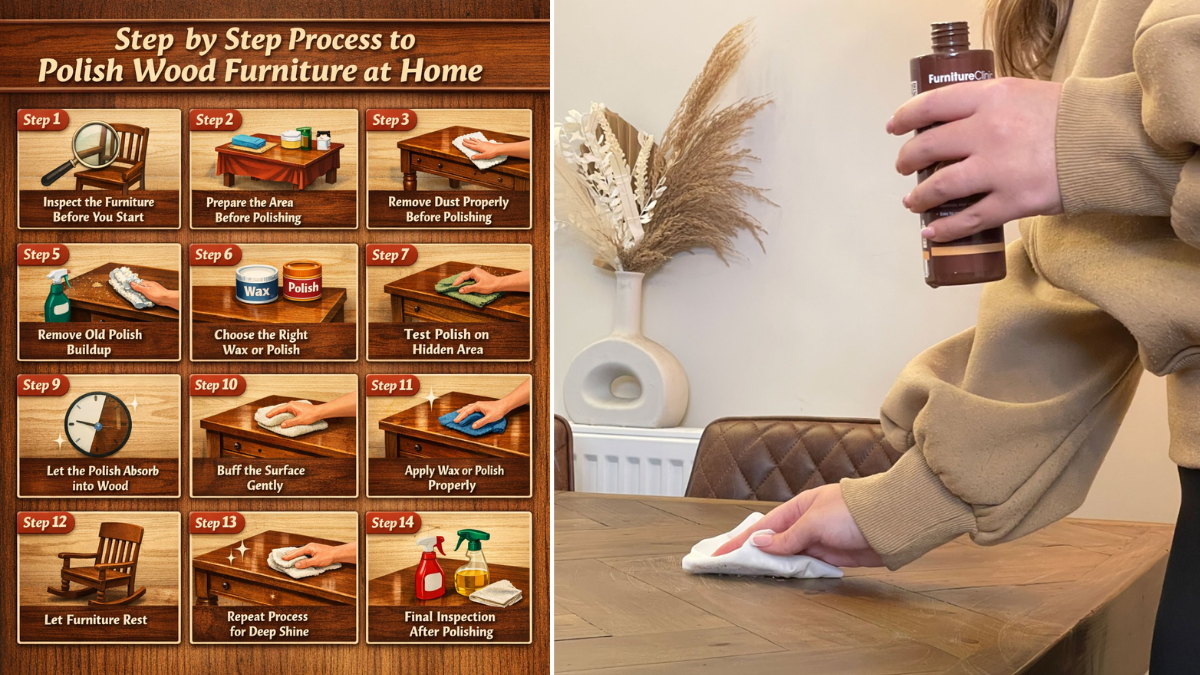
Now I will walk you through the complete step-by-step process to polish wood furniture at home properly. I want you to imagine we are doing this together in your home. Follow these steps carefully, and you will achieve professional-level results.
Step 1: Inspect the Furniture Before You Start
Before you polish wood furniture at home, take a few minutes to inspect the furniture carefully. This step is often ignored, but it makes a huge difference in the final result.
Look closely at the surface. Check if the wood is dry, scratched, faded, or sticky from old polish. Run your hand gently across the surface. If it feels rough or dull, polishing will help restore it.
Also check for these things:
- Water stains
- Scratches
- Dust buildup
- Greasy surfaces
- Faded areas
Understanding the condition helps you decide how much polishing is required. Light polishing works for slightly dull surfaces. Deep polishing is needed for older furniture.
This small step helps you avoid mistakes and choose the right polishing method.
Step 2: Prepare the Area Before Polishing
Before you polish wood furniture at home, prepare your workspace properly. This prevents dust from settling while polishing.
Move furniture away from direct sunlight. Sunlight dries polish too quickly and creates an uneven finish. Choose a shaded area with proper ventilation.
Place a clean cloth or sheet under the furniture. This prevents spills and protects the flooring.
Keep all tools nearby:
- Microfiber cloth
- Cotton cloth
- Wax or polish, Soft brush
When everything is ready, the process becomes smooth and controlled.
Step 3: Remove Dust Properly Before Polishing
Dust removal is the most important step before polishing. If dust remains, it scratches the wood during polishing.
Take a soft microfiber cloth and gently wipe the entire surface. Move along the wood grain. Do not rush this step. Pay attention to corners and edges where dust collects.
If the furniture has carved details, use a soft brush to remove hidden dust. This prevents scratches later. Avoid using rough cloth or paper towels. These can damage the surface slowly.
Step 4: Clean Sticky or Greasy Surface
Sometimes furniture develops sticky buildup due to cooking fumes, humidity, or old polish. This must be cleaned before polishing.
Mix mild dish soap with warm water. Lightly dampen a soft cloth. Gently wipe the surface. Do not soak the cloth. Excess water damages wood.
After cleaning, immediately dry the surface using a clean cloth. Never leave moisture on wood.
Step 5: Remove Old Polish Buildup
Old polish buildup blocks shine and makes furniture look cloudy. Removing this buildup restores natural beauty. Use a slightly damp cloth to wipe the surface gently. For heavy buildup, mix vinegar and water lightly and wipe carefully. Do not use strong chemicals. They damage the finish. Once done, dry the surface completely.
Step 6: Choose the Right Wax or Polish
Choosing the right wax is very important when you polish wood furniture at home. Different wax types create different finishes.
- Beeswax works best for natural shine and antique furniture. It nourishes wood and protects the surface.
- Carnauba wax gives a high gloss finish. It works best for premium hardwood furniture.
- Paste wax is best for heavy-use furniture like tables and cabinets. It provides strong protection.
If the furniture looks very dry, you can also use natural oils before waxing. This restores moisture. Choosing the right wax improves final results significantly.
Step 7: Test the Polish on the Hidden Area
Before applying polish to the entire furniture, test it on a hidden area. This prevents unexpected damage. Apply a small amount behind the furniture or underneath. Wait a few minutes and check the result. If the surface looks good, continue polishing. Professionals never skip this step.
Step 8: Apply Wax or Polish Properly
Now comes the main step. Take a small amount of wax on a soft cloth. Do not apply directly to furniture. Start applying gently in a circular motion. Work in small sections instead of polishing the entire surface at once. Always follow the wood grain direction. This creates a smooth and natural finish. Apply thin layers only. Thick layers create a sticky surface and attract dust. Move slowly and evenly.
Step 9: Let the Polish Absorb into Wood
After applying polish, let it sit for 5 to 10 minutes. This allows wood to absorb oils and wax. Do not rush this step. Absorption creates deep shine and long-lasting protection. For dry furniture, you may allow slightly longer absorption time.
Step 10: Buff the Surface Gently
Now, take a clean cotton cloth. Gently buff the surface in circular motion. Buffing removes excess wax and creates a smooth shine. This step transforms dull furniture into a polished surface. Use light pressure. Do not rub aggressively. Continue buffing until the surface feels smooth and shiny.
Step 11: Repeat Process for Deep Shine
If the furniture is very dull, repeat the polishing process once more. Apply a thin layer again and buff gently. Multiple thin layers create better shine than one thick layer. This technique is commonly used by professionals.
Step 12: Final Inspection After Polishing
After polishing, inspect the furniture again. Check for uneven shine or leftover wax. If needed, lightly buff again using a clean cloth. This final inspection ensures a perfect finish.
Step 13: Let Furniture Rest
After polishing, allow the furniture to rest for at least 1 hour. This allows polish to settle properly. Avoid placing objects immediately. This improves durability.
Step 14: Maintain the Shine After Polishing
Once you polish wood furniture at home, maintenance becomes important. Dust regularly using a soft cloth. Avoid placing hot items directly on wood. Clean spills immediately. This keeps furniture looking polished for longer.
Mistakes to Avoid
- Using too much wax creates a sticky surface
- Using silicone polish damages furniture long-term
- Skipping cleaning causes scratches
- Using rough cloth damages the finish
Final Thoughts
Now you know how to polish wood furniture at home like a professional. You do not need expensive tools. You just need the right method. Start with one piece today, and you will see the difference immediately. Your furniture deserves care. Start today.